11th Edition
World Heart Congress
THEME: "Empowering Hearts, Empowering Lives: Shaping the Future of Cardiovascular Health"
 15-16 Mar 2027
  Renaissance London Heathrow Hotel, London, UK
 THEME: "Empowering Hearts, Empowering Lives: Shaping the Future of Cardiovascular Health"
15-16 Mar 2027
Renaissance London Heathrow Hotel, London, UK 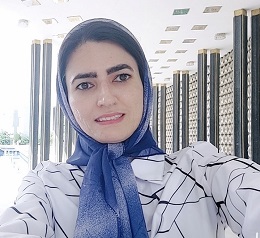
Yazd University, Iran
Title: Self-Validating Cardiovascular Digital Twin for Reliable Early Risk Detection under Imperfect Wearable Sensing
Masoumeh Jafari received the Ph.D. degree in Computer Engineering (Software) from the University of Yazd, Yazd, Iran, in 2026. From 2024 to 2025, she was a Visiting Student at the National University of Singapore (NUS), Singapore, conducting research under the supervision of Prof. Biplab Sikdar. Her research interests include intelligent healthcare systems, cardiovascular digital twins, wearable sensing, blockchain, federated learning, the Internet of Medical Things (IoMT), cybersecurity, privacy-preserving computing, and machine learning. Her current research focuses on trustworthy artificial intelligence, reliability-aware physiological monitoring, and personalized cardiovascular risk assessment using heterogeneous and imperfect real-world data.
Background: Wearable sensors provide an opportunity for continuous cardiovascular monitoring and earlier identification of potentially abnormal physiological changes. However, real-world wearable measurements are frequently affected by missing observations, noise, motion-related artifacts, sensor variability, and transient outliers. Blindly incorporating such observations into an artificial-intelligence system or cardiovascular digital twin may lead to unreliable state estimation and excessive or misleading risk alerts.
Objective: This study proposes a Self-Validating Cardiovascular Digital Twin (SV-CDT) that explicitly evaluates the reliability of wearable observations before incorporating them into a personalized cardiovascular state representation.
Methods: SV-CDT employs a reliability-aware updating mechanism that evaluates each incoming physiological observation using three complementary criteria: signal quality, temporal consistency, and physiological plausibility. Based on the resulting reliability estimate, observations are automatically classified as reliable and accepted, partially reliable and down-weighted, or unreliable and rejected. A sequential digital-twin state is then updated using only reliability-adjusted observations. To assess robustness under imperfect sensing, controlled missing-data, Gaussian-noise, outlier, and combined corruption scenarios were evaluated using 3,840 observations from 38 subjects. Performance was assessed using mean absolute error (MAE) and root mean square error (RMSE).
Results: SV-CDT consistently reduced cardiovascular-state estimation error compared with a direct-observation baseline. Under the combined corruption scenario, SV-CDT reduced MAE by 39.1% and RMSE by 41.9%. Improvements were also observed under noise and outlier conditions, with MAE reductions of 25.8% and 30.6%, respectively. In the combined scenario, 86.6% of incoming observations were adaptively down-weighted or rejected rather than being incorporated without reliability assessment.
Conclusion: The findings demonstrate the potential of integrating self-validation directly into cardiovascular digital-twin updating to improve robustness against imperfect wearable sensing. SV-CDT provides a foundation for trustworthy, personalized, and continuous cardiovascular risk-state monitoring and motivates future validation using longitudinal multimodal clinical datasets.
