11th Edition
World Heart Congress
THEME: "Empowering Hearts, Empowering Lives: Shaping the Future of Cardiovascular Health"
 15-16 Mar 2027
  Renaissance London Heathrow Hotel, London, UK
 THEME: "Empowering Hearts, Empowering Lives: Shaping the Future of Cardiovascular Health"
15-16 Mar 2027
Renaissance London Heathrow Hotel, London, UK 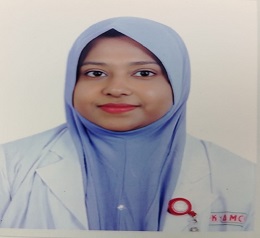
Khwaja Yunus Ali Medical College Hospital, Bangladesh
Title: Prevalence and Determinants of Hypertension Among Young Adults: A Hospital-Based Cross-Sectional Study in Sirajganj, Bangladesh
Afshana Moury Shohani is a dedicated cardiologist and academician from Bangladesh with over eight years of clinical experience in cardiovascular medicine. She currently serves as an Assistant Professor in the Department of Cardiology at Khwaja Yunus Ali Medical College & Hospital, Sirajganj, one of the largest tertiary healthcare institutions in Bangladesh, providing comprehensive care to approximately 1,200 patients daily.Her clinical and research interests encompass hypertension, heart failure, and emerging cardiovascular risk factors, with a particular focus on early detection, preventive cardiology, and evidence-based patient management. Dr. Shohani is committed to translating the latest scientific advances into clinical practice to enhance cardiovascular outcomes and improve the quality of patient care.In addition to her clinical responsibilities, Dr. Shohani is actively involved in medical education, academic development, and cardiovascular research. She is passionate about mentoring future healthcare professionals and fostering excellence in clinical training and scholarly activities. Shohani is a member of the American College of Cardiology (ACC ID: 20092019). Through her clinical, academic, and research contributions, she continues to advance cardiovascular health and promote excellence in patient care both in Bangladesh and within the global medical community.
Background: Early-onset hypertension is a major concern worldwide, yet this population remains overlooked specially in low- and middle-income countries. This study aimed to determine the prevalence of hypertension among young adults in northern Bangladesh and identify its socio-demographic, behavioral, clinical, and psychological determinants.
Methods: A hospital-based cross-sectional study was conducted among 390 adults aged 18-39 years attending Khwaja Yunus Ali Medical College and Hospital, Sirajganj. Participants were recruited through consecutive sampling. Data were collected through face-to-face interviews using a pre-tested semi-structured questionnaire and standardized anthropometric and blood pressure measurements. Hypertension was classified according to the 2017 ACC/AHA guidelines.
Associations were assessed using chi-square tests, and independent predictors were identified through multivariable logistic regression.
Results: Prevalence of hypertension was 72.8% (n=284): 44.1% Stage 1, 26.2% Stage 2, and 2.6% Hypertensive Chi-square demonstrated significant associations between hypertension and smoking (23.1%), fast-food consumption (61.5%), and added salt intake (69.2%). In multivariable analysis, clinical obesity (BMI ?25 kg/m2) was the strongest independent predictor (AOR=3.42, 95% CI: 1.85-6.32, p<0.001), followed by co-occurring anxiety/depression (AOR=2.65, 95% CI: 1.54-4.56, p<0.001), family history (AOR=2.41, 95% CI: 1.40-4.15, p<0.001), and sedentary habits ?4 hours/day (AOR=1.98, 95% CI: 1.15-3.41, p=0.014). Among females (n=182), using oral contraceptive was associated with hypertension (AOR=2.14, 95% CI: 1.12-4.08, p=0.021).
Conclusion: The 2017 ACC/AHA guidelines revealed a substantial burden of early-onset hypertension, with obesity, sedentary behavior, and psychosocial distress emerging as key contributing factors. These findings underscore the importance of early detection, targeted prevention, and population-based interventions to improve long-term cardiovascular health among young adults.
